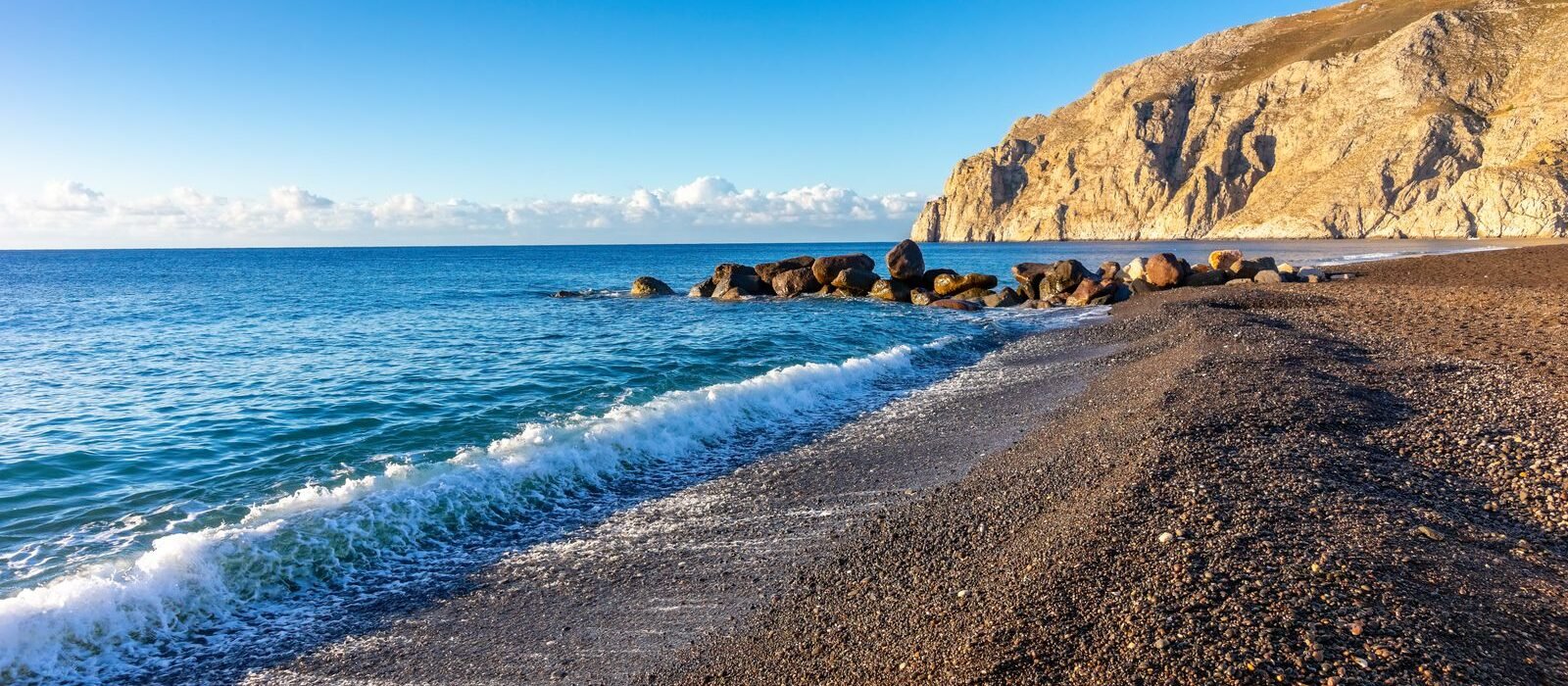
The Bronze Age City Under the Ash
Around 1600 BC, the Minoan city of Akrotiri was buried under metres of volcanic ash when the Thera supervolcano erupted in one of the largest explosions in human history. Unlike Pompeii, where inhabitants were killed by the eruption, Akrotiri appears to have been evacuated beforehand — no human remains have been found. What was left behind was an entire city, perfectly preserved.
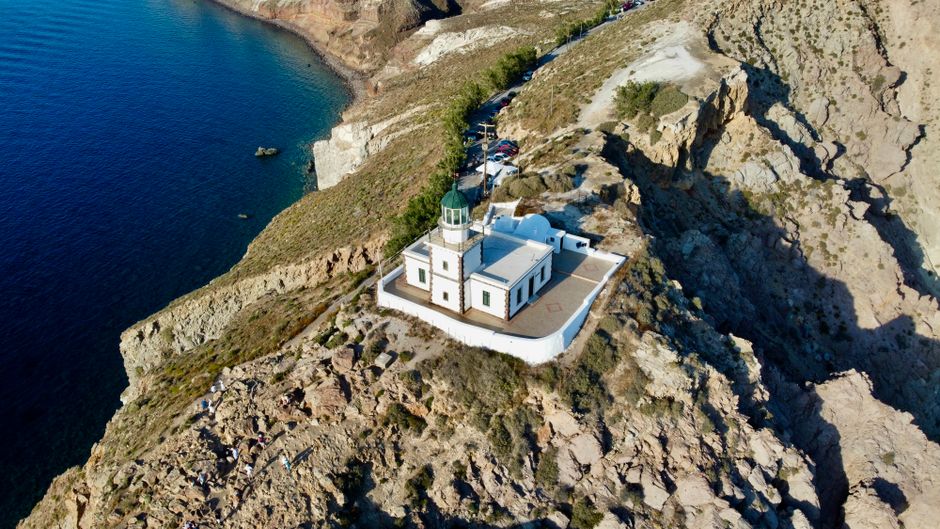
Akrotiri is one of the most significant archaeological sites in Europe and, remarkably, still only partially excavated. What is visible represents perhaps 3% of the buried city.
The Famous Frescoes
The frescoes recovered from Akrotiri reveal a sophisticated, cosmopolitan society — images of a Minoan fleet, blue monkeys (from Africa), fishermen with their catch, and the extraordinary Spring Fresco showing swallows among red lilies. The originals are in Athens; high-quality replicas are displayed in the Akrotiri museum and at the Museum of Prehistoric Thera in Fira.
What You’re Actually Looking At
Akrotiri was a Minoan-influenced trading town buried by the same Thera eruption that may have inspired the Atlantis myth. Unlike Pompeii, where you’re walking through an open-air site exposed to the elements, Akrotiri sits under a modern protective roof — which makes it completely doable in August heat. The excavation covers roughly 20,000 square meters, though only a fraction is open to visitors. What you can see is remarkable: multi-story buildings still standing two or three floors high, drainage systems, storage jars called pithoi that are taller than most adults, and street layouts you can actually follow.
Get the Free Santorini Insider Guide
Where to watch the sunset without the crowds, which villages deserve your day, and what you need to book before you arrive.
The site was first excavated by Spyridon Marinatos starting in 1967, and work continues today. One thing people don’t expect: there are no human remains. Everyone apparently evacuated before the eruption. The town was simply left behind, perfectly preserved, like someone hit pause on 3,500 years of history.
Getting There and Tickets in 2026
The site sits on the southern tip of Santorini, near the village of Akrotiri — not to be confused with the Cape Akrotiri lighthouse nearby. From Fira, a taxi runs about €25-30 each way. Buses from the main Fira station go to Akrotiri village regularly in summer, roughly every 30-40 minutes, for around €2. The walk from the bus stop to the site entrance is maybe 10 minutes.
- Entry fee: €12 for adults (combined ticket with the prehistoric Thera museum in Fira is €14 and genuinely worth it)
- Opening hours: Generally 8am to 8pm in peak season, 8am to 3pm off-season — always verify on the official Greek Ministry of Culture website before you go
- Best time to arrive: First thing in the morning, ideally by 8:15am, before cruise ship groups arrive around 10am
Guided Tours or Solo?
You can walk through independently with the audio guide (€3 extra, pick it up at the entrance — it’s actually decent), but a guided tour adds real context. The site labeling is sparse in places, and without someone explaining which building functioned as what, you’re largely looking at old walls. I’ve seen good small-group tours on GetYourGuide that combine Akrotiri with the Red Beach and the lighthouse for around €35-45 per person. That’s a solid half-day without needing a rental car.
The Highlights Inside the Site
The Xeste 3 building is the one that stops people in their tracks. It’s where many of the famous Akrotiri frescoes were found — the ones showing saffron gatherers and young women that now live in the National Archaeological Museum in Athens. The originals aren’t here anymore, and that’s genuinely disappointing. What you get are reproductions and the structures themselves. Still worth seeing, but manage expectations.
The Mill Square area gives you the clearest sense of urban planning. You’re looking at a functioning town — not just a temple complex or a palace, but bakeries, workshops, houses. The pithoi storage jars lining certain rooms held oil, wine, and grain. There’s a building archaeologists call the West House that had wooden furniture imprints preserved in the ash. The scale of daily life here is what gets you.
What’s Changed for 2026
The site expanded its accessible pathways in late 2024, making more of the walkway system wheelchair and stroller friendly. New interpretive panels were installed in the northern section with updated archaeological findings. Timed entry slots during peak July-August months are now recommended — you can book these through the official Greek e-ticketing portal or bundled into a guided experience via Viator if you prefer handling everything in one booking. The site still doesn’t allow bags larger than a small daypack inside, and photography is permitted throughout for personal use.
Pairing Akrotiri With the Rest of Your Day
Red Beach is a 10-minute walk from the site and worth the short detour even if it’s crowded. The colored rock formations are genuinely striking. Grab lunch at one of the tavernas in Akrotiri village rather than the tourist spots near the beach — the village square has a couple of family-run places where you can eat well for €12-15 per person.
The prehistoric Thera museum in Fira is the essential follow-up. That’s where the actual frescoes live — the reproductions, yes, but at impressive scale — and it gives Akrotiri’s ruins real narrative. Do the site in the morning, museum in the afternoon, and you’ve had one of the more genuinely educational days Santorini offers. Far more satisfying than waiting two hours for a sunset that half the island is also waiting for.
Honest Verdict
Akrotiri won’t suit everyone. If ancient ruins leave you cold and you’re on Santorini purely for the scenery and the wine, skip it without guilt. But if you have any interest in ancient history, or you’ve ever stood at Pompeii and wanted more of that feeling, this place delivers something Pompeii can’t — genuine isolation and a site that still feels like it’s being discovered. It’s not overcrowded, the €12 entry is fair, and two hours here will outlast most Instagram moments.
Is the Museum of Prehistoric Thera Worth It?
Emphatically yes. The museum in Fira houses the original Akrotiri frescoes removed for conservation, along with the finest pottery, jewellery, and artefacts from the site. Seeing the actual frescoes — not the replicas — is a qualitatively different experience, and I’d argue it’s the better half of the two-site combination. The “Young Fisherman” fresco alone justifies the trip: 1.5 metres tall, a teenager rendered in ochre and blue holding a string of mackerel, painted 3,600 years ago with an ease and confidence that still stops people in front of it. Allow 1–1.5 hours. The combined ticket with the archaeological site saves €9 and is the obvious choice.
Frequently Asked Questions
What is Akrotiri in Santorini?
How long does it take to visit Akrotiri?
When is the best time to visit Akrotiri?
How much does Akrotiri cost to visit?
Was Akrotiri connected to the myth of Atlantis?
More Things to Do in Santorini
Top-rated experiences with free cancellation and instant confirmation.
Related Articles

Here are the latest guides we published on SantoriniToursHQ this month. Fresh, hand-written, and packed with practical detail…
Santorini Beyond the Blue Domes Most people come to Santorini for the sunsets and the overpriced wine. But…
June is one of the best months to visit Santorini, and genuinely not enough people realize it. You…