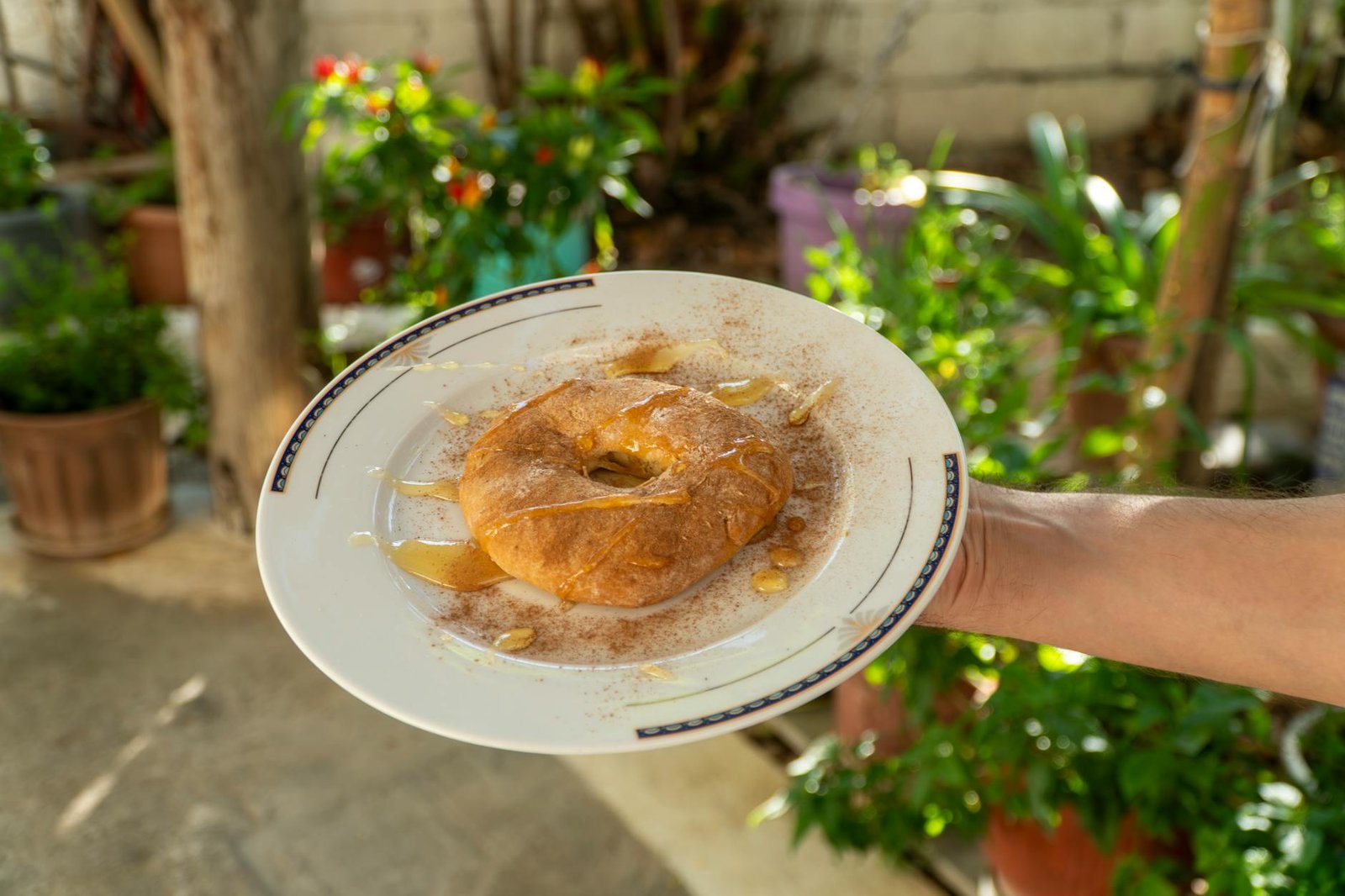
The Unique Flavours of Volcanic Soil
Santorini’s volcanic soil does something genuinely strange to produce. The same ash and pumice that shapes the island’s extraordinary wine grapes also drives the intensity in its vegetables — and you won’t find these grown anywhere else. The cherry tomatoes here taste almost sun-dried even when fresh. The white eggplants, fava beans, and capers are island exclusives, full stop. The near-total lack of freshwater has forced the island’s farmers into producing ingredients that are genuinely unlike anything grown elsewhere — intensely concentrated, with a character no mainland equivalent can replicate.

Foods You Must Try in Santorini
- Tomatokeftedes — Cherry tomato fritters with onion and mint. The island’s most iconic dish. Crispy outside, intense inside. You’ll eat them at multiple stops and quickly develop strong opinions about whose version is better — the ones in Pyrgos versus Oia is a genuine debate worth having.
- Santorini Fava — Pureed yellow split peas with olive oil, lemon, capers, and onion. Ancient, simple, and genuinely special. Santorini fava carries PDO (Protected Designation of Origin) status, meaning the volcanic soil and micro-climate here produce something qualitatively different from mainland Greek fava. Nothing like it elsewhere.
- White Eggplant — Grown only in Santorini’s volcanic soil. Sweeter and far less bitter than the purple variety. Often grilled with local olive oil and herbs — it sounds simple because it is, and that’s the point.
- Fresh Capers — Wild capers grow right out of the island’s stone walls. Dried in sea salt, they end up in everything from salads to fish dishes. The briny, almost floral quality of Santorini capers is something you notice the first time you taste them.
- Local Cheese — Chloro (fresh goat cheese, tangy and creamy, made in small batches) and kopanisti (spicy fermented cheese — pungent, creamy, with a slow heat) are the two local specialties worth seeking out. Kopanisti is an acquired taste. Acquire it anyway.
- Fresh Seafood — Sea urchin, octopus dried in the sun, grilled whole fish from Ammoudi Bay.
Food Tour Formats
Walking food tour (Fira or Oia) — 3–4 hours, five to seven tasting stops, no transport needed. Guides take you to market stalls, bakeries, traditional tavernas, and artisan food producers tucked into the lanes. Good for getting your bearings on the culinary landscape of a single village. Cost: €55–85 per person.
Farm and village tour — Half a day, includes transport out to the agricultural areas around Akrotiri, Megalochori, or the Profitis Ilias hillside. You’ll visit a tomato producer or fava farm and finish with a traditional lunch. Slower pace, more context, and a much richer experience if food is actually your focus. Cost: €75–120 per person.
Cooking class — Morning market shopping followed by a three-hour cooking class where you make tomatokeftedes, fava, moussaka, and baklava — then eat all of it. Hands-on, social, and worth it if you want to bring the recipes home rather than just the memories. Cost: €90–140 per person.
Get the Free Santorini Insider Guide
Where to watch the sunset without the crowds, which villages deserve your day, and what you need to book before you arrive.
Most standard guided food tours run €72–95 for 3–4 hours and cover six to eight tasting stops spread across different villages, wine pairings along the way, a local guide who actually knows the producers, and usually a market stop so you can pick up fava or capers to bring home. That last part alone is worth it — the packaged stuff at the airport is a different product entirely. A good food tour connects you to the farmers, producers, and family-run tavernas keeping these traditions alive. A bad one feeds you the same tomatokeftedes you’d get at any tourist-facing restaurant in Fira. There’s a real difference.

Local Drinks to Try
Assyrtiko wine — The grape that defines Santorini. Dry, mineral, high-acid white wine that tastes like nothing produced on the mainland. The volcanic pumice soil and the basket-trained vines — trained low and circular to survive the relentless Aegean wind — give Assyrtiko a complexity that genuinely rivals good Burgundy whites. Drink it cold with fresh seafood or fava and you’ll understand the comparison.
Pros
- Access to genuinely unique volcanic-soil ingredients (cherry tomatoes, white aubergines, fava, capers) unavailable elsewhere
- Local guides connect you to actual producers and family-run tavernas keeping traditions alive
- Six to eight tasting stops across different villages plus wine pairings in a single outing
- Market stop included on most tours lets you bring home quality local products far superior to airport packaged goods
Cons
- Prices have climbed noticeably and budget should be planned carefully when comparing packages
- Lower-quality tours serve the same tourist-facing tomatokeftedes found at any Fira restaurant rather than authentic producer stops
- Summer heat is a real factor, making earlier departures necessary and midday touring uncomfortable
- Farm and village tours require transport out to agricultural areas, adding logistical complexity compared to a simple walking tour
Vinsanto — Santorini’s dessert wine: sun-dried Assyrtiko grapes fermented and barrel-aged into a deeply amber, complex sweetness. Order a small glass with local honey cake. It’s the island’s most celebrated wine internationally and it earns that reputation.
Rakomelo — Warm raki with honey and spices, technically a winter drink but available year-round in the traditional kafeneions. After a long day of walking in August heat, it’s surprisingly restorative.
Best Villages for Eating
Pyrgos — Medieval village, best traditional tavernas, lowest prices on the island. Most tourists skip it entirely.
Ammoudi Bay — The fishing port below Oia. Octopus drying on lines outside the tavernas. The freshest seafood on the island.
Fira — Best variety and most accessible. Excellent local spots if you know where to look beyond the tourist strip.
Where to Eat Independently
After a food tour, you’ll have a decent mental map of where to eat for the rest of your trip. But for going it alone: Metaxy Mas in Exo Gonia village (inland, about 10 minutes from Fira) does the most honest home-style cooking on the island; the Ammoudi fish tavernas at the bottom of Oia’s 300-odd steps are worth the climb down for grilled seafood; Nikolas in Fira serves no-frills, honest portions at prices that won’t make you wince; and any of the small village kafeneions in Emporio, Pyrgos, or Megalochori will give you ouzo and mezze at prices completely detached from the tourist-area markup. The further you walk from a caldera view, the better the value gets. That’s not a coincidence.
Hungry for more? Our sister site FoodTourTrails has an in-depth Santorini food guide — best dishes, where locals actually eat, and food tours worth booking.
Frequently Asked Questions
What foods can I try on a Santorini food tour?
Are Santorini food tours suitable for vegetarians?
How long does a Santorini food tour last?
Are Santorini food tours worth it?
Where do Santorini food tours usually take place?
More Things to Do in Santorini
Top-rated experiences with free cancellation and instant confirmation.
Related Articles
Updated July 2026: Update — July 2026: We revisited this class last month and the summer schedule has…

Updated July 2026: Updated July 2026: If you’re visiting this summer, book your shoot at least three to…
Find Santorini most photogenic secret locations with a local photography guide — beyond the blue domes and tourist…