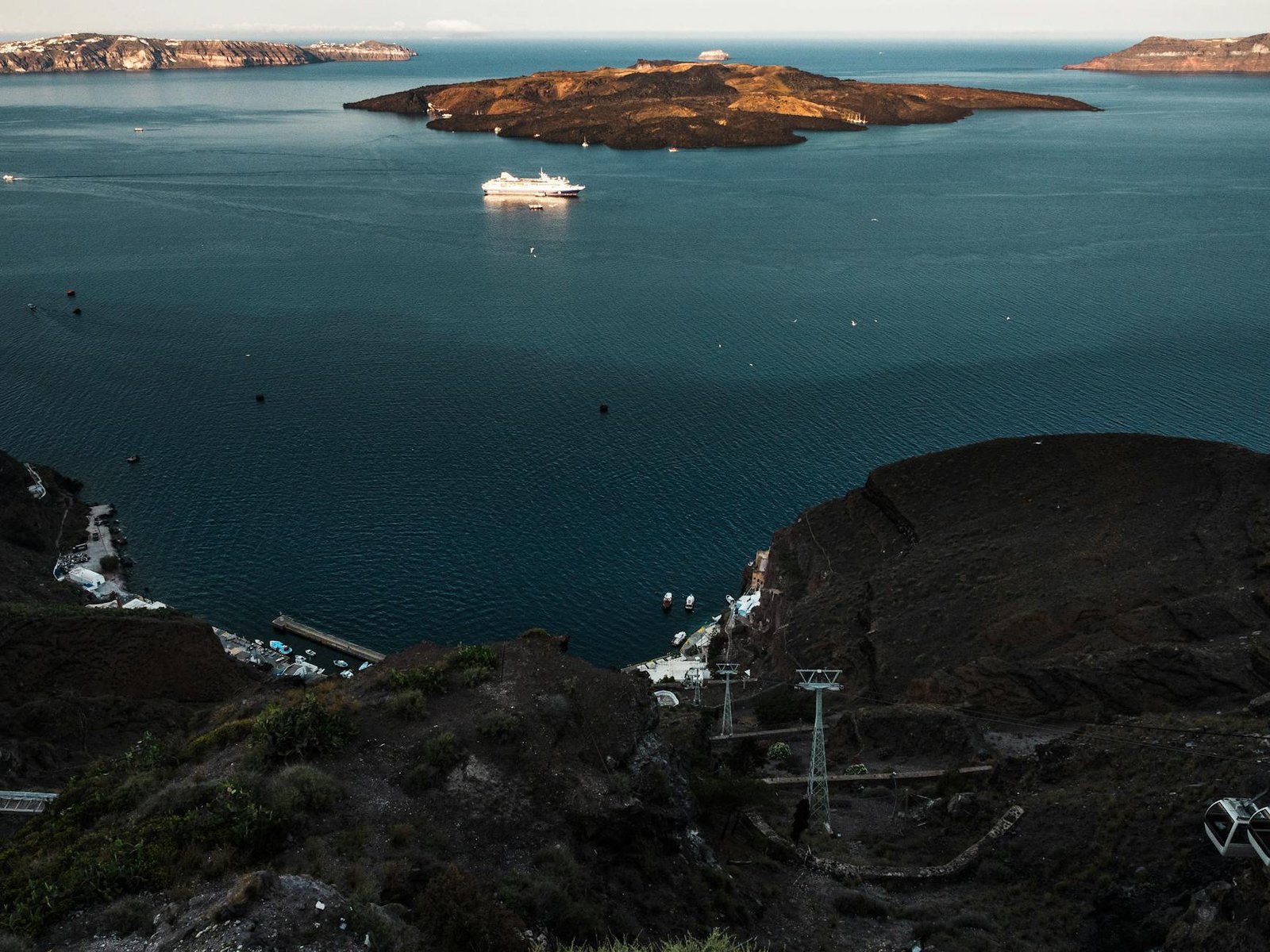
The Short Answer
The best time to visit Santorini is May–June or September–October. You get warm weather, a sea that’s actually worth swimming in, restaurants and tour operators running at full capacity — and none of the summer madness that turns July and August into something resembling a very hot theme park.
The worst time: late July and all of August. The island is gorgeous, yes. It’s also brutally hot, catastrophically crowded, and will drain your wallet faster than anywhere else in Greece.
Month by Month
April
The island wakes up properly in April. Temperatures sit around 18–22°C — genuinely ideal for walking the caldera rim without collapsing. The sea hovers at 18°C, which is technically swimmable if you’re tough about it. Hotels run at around 50% capacity and prices are 40–60% lower than peak summer. A handful of restaurants haven’t reopened yet, so check ahead. The caldera views in that clear spring light are extraordinary.
May
The best month. Full stop. Temperatures reach 22–26°C, the sea warms to 20–21°C, almost nothing is crowded, and everything is open. The island feels genuinely alive without that desperate, overcrowded energy that sets in later. Book 3–4 weeks ahead for the good hotels — this secret is getting out.
Get the Free Santorini Insider Guide
Where to watch the sunset without the crowds, which villages deserve your day, and what you need to book before you arrive.
June
Excellent, though the second half gets busier. Temperatures climb to 26–30°C and the sea reaches 23°C. Still significantly quieter than July or August and noticeably cheaper. Evenings are long and warm and comfortable. If May doesn’t work for your schedule, early June is nearly as good.
July
Peak season. Temperatures push 28–34°C, and the meltemi wind kicks in hard. The wind actually keeps things bearable, but some days it’s strong enough that boat tours get cancelled outright — worth knowing if you’ve booked a catamaran day trip. Oia at sunset becomes genuinely uncomfortable. Not bad-uncomfortable. Elbow-in-your-ribs, can’t-see-anything uncomfortable. Book everything 6–8 weeks out.
August
The most crowded month in all of Greek tourism. Oia at sunset: thousands of people crammed onto a narrow clifftop path. Fira: nearly impossible to walk through. The heat is intense — 32–38°C on bad days. The sea is perfect (25–26°C), and the energy is electric if that’s your thing. If you’re coming in August, book three months ahead and show up at sunset viewpoints a solid two hours early.
September
The finest month on the island. Summer warmth without the August madness. The meltemi calms down, the sea hits its peak temperature at 26°C, and the grape harvest brings a genuinely festive atmosphere — wineries are open, celebrating, and often offering harvest experiences. Prices drop 20–30% from August. Book 6–8 weeks out.
October
Strong for the first half. Temperatures drop to a comfortable 22–26°C, perfect for exploring on foot. Rain becomes a real possibility from mid-October onward, but the sea holds at 24°C and the tourism infrastructure stays fully operational. By late October, some hotels start closing for the season. The golden autumn light makes it arguably the best month for photography.
November to March
Most of the island shuts down. Around 20% of hotels and restaurants operate year-round, mostly in Fira and Perissa. Flights are paradoxically expensive because fewer routes operate. That said — the winter light here is something else. Empty villages, dramatic stormy seas, the caldera to yourself. For independent travellers with flexibility, November and March can be genuinely memorable in a way that August simply can’t be.
Month-by-Month Guide to Visiting Santorini
March & April — The Awakening
Spring Santorini is a different island. Temperatures hover around 16–20°C, wildflowers push up along the caldera rim, and most hotels and restaurants are back open by mid-March. Prices run 30–50% below peak season. Oia castle and Amoudi Bay are practically yours on a weekday morning. The sea is still cold — 17–18°C — so swimming is limited, but hiking, wine tasting, and photography are all exceptional. If Easter falls during your trip, stay for it. The celebrations in the Cyclades are some of the most atmospheric in Greece.
May & June — The Sweet Spot
This is the answer for most people. Sea temperatures reach 22–24°C, sunset doesn’t happen until after 20:30, crowds are manageable, and prices are reasonable. Every restaurant and activity is fully running. The light in May especially is magnificent — soft, clear, and flattering in a way the harsh July sun isn’t. June warms up to 27–30°C but evenings stay comfortable. If your dates are flexible at all, push for May or early June.
July & August — Peak Season
The most popular months, and the most demanding. Temperatures hit 32–35°C, Oia gets genuinely congested at sunset — arrive 90 minutes early for a decent spot, or watch from a catamaran and skip the crowds entirely. Prices are at their absolute peak. That said, the island runs at full capacity: every boat tour, winery, and restaurant is firing, the beaches are warm and busy, and there’s an energy that some people specifically come for. If a buzzing, lively atmosphere is what you want, August delivers. Just book everything — accommodation, tours, restaurants — months in advance and accept the heat.
September & October — The Best-Kept Secret
Locals and repeat visitors almost universally prefer September. The heat softens to 26–28°C, the sea is at its warmest all year (26–27°C), and the crowds thin noticeably after mid-September. The vineyards are harvesting — some wineries run grape-picking experiences worth booking specifically for. Prices fall 20–30% from August peaks. October is quieter still, with pleasant temperatures around 22–24°C and a golden quality to the light that photographers specifically plan trips around.
November to February — Off-Season
Most of Santorini goes quiet between November and February. Hotels, restaurants, and boat tours either scale way back or close entirely. But there’s a real appeal here that’s hard to explain until you’ve experienced it — the island’s 15,000 permanent residents reclaim the streets, prices hit rock bottom, and after the autumn rains the landscape actually turns green. Fira and Perissa stay fairly active year-round. If you want solitude and something closer to authentic island life, a November or February visit can be genuinely memorable.
What’s the Best Time to Visit Santorini — Summary
Best overall: May, June, or September
Best for budget: March, April, or October
Best for beaches and swimming: July, August, September
Best for photography: April, May, October
Best for wine tours: September (harvest season)
Avoid if you hate crowds: First two weeks of August
How Far in Advance to Book
For July and August, book accommodation 3–6 months ahead. Caldera-view hotels go first, every time. For May, June, and September, 6–8 weeks is usually enough — though the best-value caldera properties disappear quickly even then. Off-season (October through April), 2–3 weeks ahead is generally fine. One rule that applies regardless of when you travel: catamaran tours, boat excursions, and sunset-view restaurants should be booked at least a week out. They sell out faster than you’d expect.
The Honest Month-by-Month Reality Nobody Tells You
Most guides split Dubrovnik into three seasons and call it done. That framing hides more than it reveals. Here is what actually happens, month by month, from someone who has watched the city fill and empty for years.
January and February are genuinely underrated, not just tolerable. Yes, roughly a third of the restaurants on Stradun are shuttered, and the cable car sometimes closes for maintenance stretches of two or three weeks without much warning. But the Old City belongs to residents again. Hotel rates drop to a fifth of peak prices. The bura wind can be punishing — gusts above 100 km/h are not unusual — so pack accordingly and accept that a day or two indoors is part of the deal.
March and April look good on paper but carry a catch: the cruise ships return before the restaurants do. You get crowds without the full infrastructure to absorb them. April afternoons on the walls can already feel uncomfortably busy between 10am and 2pm when two or three ships dock simultaneously. Walk the walls before 8am or after 5pm, non-negotiably.
May is the single best value window, full stop. Almost everything is open, water temperature is swimmable by mid-month, and you are arriving before the charter-flight season floods accommodation. Prices sit at roughly 60 percent of July rates. Book the walls for opening time; the light is better anyway.
June through August are not overrated for weather — the weather is genuinely perfect — but the crowd reality is brutal and undersold. On peak days in July, the city inside the walls holds more tourists than permanent residents by a factor of roughly eight to one. Banje Beach is elbow-to-elbow by 9am. Expect to pay 18 to 22 euros for a mediocre pasta within the walls. If you must come in summer, stay outside the Old City in Lapad or Babin Kuk; your sanity and your wallet will both recover faster.
September and early October are overrated relative to May. The shoulder-season reputation has spread too far. September still carries high-season prices at most properties, and cruise traffic barely drops until after the first week of October.
- Best value-to-weather ratio: second and third week of May
- Most honest off-season pick: February, if you accept the wind and some closures
- Most overrated month: September — crowds and prices have not caught up with the cooler-air reputation
- Avoid: any Saturday in July when more than two ships are in port; check vessel schedules at Dubrovnik Port Authority before booking day-specific plans
Frequently Asked Questions
What is the best month to visit Santorini?
Is Santorini crowded in summer?
Is Santorini worth visiting in spring?
Does it rain a lot in Santorini?
Is Santorini open in winter?
More Things to Do in Santorini
Top-rated experiences with free cancellation and instant confirmation.
Related Articles
Scuba diving in Santorini doesn’t get nearly as much attention as the sunsets and wine, but honestly, it…
The definitive comparison of Santorini top three villages — what each offers, who each suits, and where to…

Updated July 2026: Update (July 2026): Ferry schedules between Santorini and Heraklion have shifted again this year —…