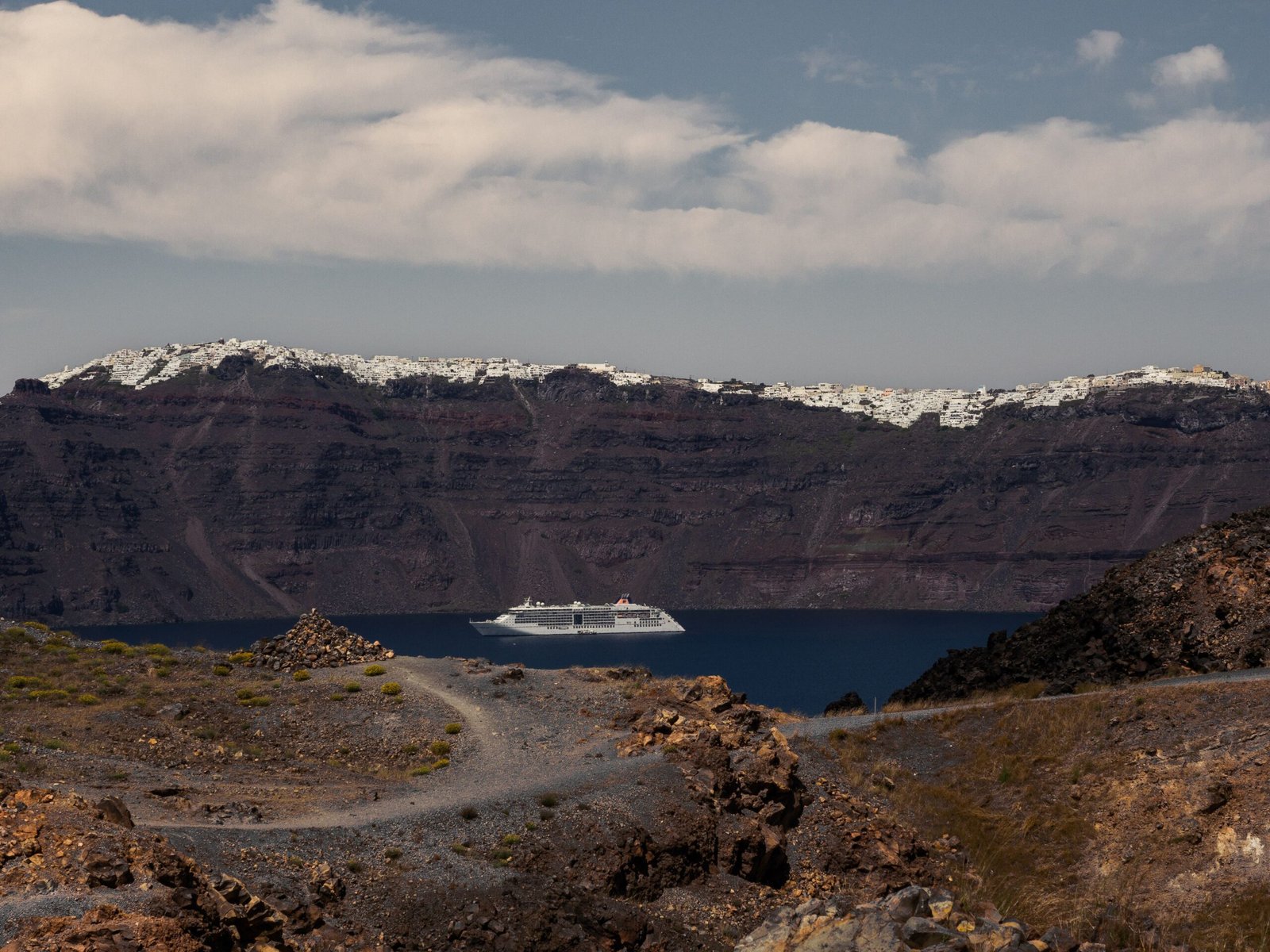
The Walk Everyone Talks About — But Few Actually Finish
The Santorini caldera hike is one of those experiences that sounds romantic in theory and turns genuinely brutal in practice if you’re not prepared. I’ve done it twice now — once in the wrong direction at the wrong time of day, sweating through my shirt before 10am, and once properly, early morning, Oia to Fira, with the right shoes and enough water. The difference was night and day.
The trail runs roughly 10km along the caldera’s edge, connecting the postcard village of Oia in the north to the island’s capital Fira in the south. It passes through Imerovigli and Skaros Rock, drops down through Firostefani, and ends at the cable car station above the old port. On paper, it’s a straightforward day walk. On the ground, it’s a mix of smooth cobblestones, loose dirt paths, uneven lava rock, and sections where you’re genuinely wondering if you’ve wandered off the trail entirely.
Oia to Fira or Fira to Oia?
Go Oia to Fira. Almost everyone you’ll meet doing the trail in reverse will tell you the same thing — they wish they’d started in Oia. Here’s the practical reason: Oia is quieter in the morning, the light hits the caldera from the east and illuminates the white villages beautifully as you walk south, and you’re walking toward Fira where all the transport links are. Finishing in Fira means you can grab a bus, taxi, or even the cable car down to the port without any planning headaches. Starting in Fira means you finish in Oia, which is more remote and the famous sunset crowds make late afternoons there genuinely unpleasant.
When to Start
Leave Oia by 7:00am, 7:30am at the absolute latest in summer. By 9am, the sun is already doing serious work, and there’s almost no shade on this trail. I mean almost none — a few patches near Imerovigli, but don’t count on them. In July and August, temperatures regularly hit 32–35°C by midday. Starting early also means you’ll have the first half of the trail almost entirely to yourself, which changes the experience completely. The trail gets noticeably busier after 9am as day-trippers from cruise ships join in.
Get the Free Santorini Insider Guide
Where to watch the sunset without the crowds, which villages deserve your day, and what you need to book before you arrive.
If you’re visiting in May, June, or September, you have a little more flexibility — a 8am start works fine and the temperatures are far more forgiving. October is genuinely the sweet spot. Cool mornings, thin crowds, and the light is softer and more interesting for photos.
How Long Does It Actually Take?
Budget 3.5 to 5 hours depending on your pace and how many times you stop. The fit, no-nonsense walker will do it in under 3.5 hours. Most people doing it for the experience, stopping at viewpoints and taking photos, will land around 4 to 4.5 hours. The trail is not technically difficult — it’s rated easy to moderate — but the uneven surfaces slow you down more than you expect, especially around Skaros Rock where the path drops steeply and then climbs back up.
Pros
- Stunning caldera-edge views throughout, including unique angles of Oia's blue domes without sunset crowds
- Early morning start means first half of trail almost entirely to yourself before cruise-ship day-trippers arrive after 9am
- Finishes in Fira with easy access to buses, taxis, and the cable car — no logistics headaches
- Optional Skaros Rock detour adds 360-degree volcanic promontory views for those with energy to spare
Cons
- Almost no shade on the trail; temperatures regularly hit 32–35°C by midday in July and August
- Uneven surfaces — cobblestones, loose dirt, lava rock — slow progress more than expected, especially the steep drop and climb around Skaros Rock
- No reliable water sources on the trail itself; must carry minimum 1.5–2 litres per person
- Some sections near Skaros are easy to miss and trail can feel confusing in places
The Skaros Rock Detour
Worth doing if you have the energy. It adds about 45 minutes return and takes you out to a volcanic promontory with views in every direction. Go early and it’s just you and maybe a handful of other walkers. Skip it if you’re already struggling by the time you reach Imerovigli.
What to Bring
- Water: Minimum 1.5 litres per person. There are no reliable water sources on the trail itself. I’d bring 2 litres in summer.
- Sun protection: Sunscreen, a hat that actually stays on in the wind, and sunglasses. The caldera reflects heat upward and you’ll burn faster than you think.
- Shoes: Proper walking shoes or light trail runners. Not sandals. Not flip-flops. I’ve seen people attempt this in sandals and it ends badly around the rocky descent near Skaros.
- Snacks: There’s a small café in Imerovigli and a couple of spots near Firostefani, but don’t rely on them being open early. Bring something.
- Cash: Some of the small cafés along the route don’t take cards reliably.
- A light layer: Early mornings in spring and autumn can be surprisingly cool with the wind coming off the caldera.
The Views Worth Stopping For
About 20 minutes into the walk from Oia, you hit the first major viewpoint looking back at the village. This is genuinely one of the better angles you’ll get of Oia’s famous blue domes — and you’re seeing it without the shoulder-to-shoulder crowds that gather there at sunset. The stretch approaching Imerovigli gives you a clear view of Nea Kameni, the active volcanic island in the caldera’s centre. And the final descent into Fira, coming through Firostefani, puts the whole caldera in front of you at once. Take your time there.
Guided vs. Solo
You don’t need a guide for this trail — it’s well-marked enough that getting seriously lost is unlikely, though some sections near Skaros are easy to miss. That said, if you want context about the geology and the villages you’re walking through, a guided option adds real value. Both Viator and GetYourGuide list small-group caldera hikes that typically run €35–55 per person including transport back from Fira. Worth considering if it’s your first time on the island and you want someone else handling the logistics.
Getting to the Start in Oia
Buses from Fira to Oia run frequently from about 6:30am and cost around €2.50 each way. The journey takes 25–30 minutes. Taxis exist but negotiate the price upfront — expect €15–20 for the one-way trip. The trail starts near the windmills at the southern end of Oia village. Most GPS apps will get you there, but ask anyone in Oia pointing south and they’ll know exactly where you mean.
Frequently Asked Questions
Is the Oia to Fira caldera hike suitable for beginners?
Can you do the hike in both directions — is Fira to Oia possible?
Are there toilets or cafés along the trail?
What time of year is best for the caldera hike in 2026?
How much does it cost to do the Oia to Fira hike?
More Things to Do in Santorini
Top-rated experiences with free cancellation and instant confirmation.
Related Articles

Updated July 2026: Updated July 2026: If you’re visiting this summer, book your shoot at least three to…
Find Santorini most photogenic secret locations with a local photography guide — beyond the blue domes and tourist…
Updated July 2026: Update note, July 2026: High season is in full swing right now, so ATV rental…