Santorini tourist scams are not new, but in 2026 they have grown more sophisticated — and more expensive. The island draws over two million visitors a year into a place with roughly 15,000 permanent residents, and that ratio creates enormous pressure to extract money from anyone who looks like they just stepped off a cruise ship. This guide breaks down the most common ways visitors get stung, from inflated menu prices to dodgy tour operators, and explains how to protect yourself without becoming paranoid and miserable.
How We Picked These
Every scam, overpricing pattern, and tourist trap on this list was selected because it affects a significant number of independent travellers visiting Santorini — not one-off complaints but documented, recurring problems. The focus was on Santorini tourist scams that cost real money: instances where visitors routinely pay 30–200% above fair value. We excluded minor inconveniences (pushy postcard sellers, for instance) and concentrated on situations where a little foreknowledge saves €20 to €200. Anything that appeared only on a single TripAdvisor thread or lacked corroboration from multiple credible sources was left out. Tour operators with a clean complaints record on Viator or GetYourGuide were noted as safer alternatives where relevant.
Caldera-View Restaurant Menu Trap
The island's most expensive meal you didn't mean to order.
Top PickThe mechanism is simple: a host stands outside with an iPad showing sunset photos and seats you before you've looked at prices. Menus in these establishments often lack price anchoring — the cheapest item is still €22 — and the 'catch of the day' is priced by the kilo without the server volunteering the weight. A two-person dinner with a carafe of local wine routinely lands at €130–180, for food that a taverna in Pyrgos would serve for €55–70.
The specific tell is the seating host. Legitimate restaurants with confident food don't need someone outside performing the role of carnival barker. If you're approached and seated in one fluid motion before you've asked to see the menu, you're in the trap. Walk in only when you've read the posted menu — all establishments in Greece are legally required to display prices outside.
The honest alternative: Melitini in Imerovigli, Lotza in Oia's back streets, and Metaxy Mas in Exo Gonia all receive consistent positive feedback for pricing that matches quality. None of them employ pavement hosts.
Port Transfer Tout Scam
Unofficial 'transfers' from the port that triple the legitimate fare.
When the ferry docks at Athinios, individuals in semi-official-looking clothing approach passengers with clipboards and offer 'transfers to your hotel.' The KTEL public bus runs from the port to Fira for €1.80 and departs roughly 20–30 minutes after major ferry arrivals. The tout transfer to the same destination costs €25–50 per person and often involves a detour to a timeshare-style 'welcome centre' where you'll sit through a property pitch before reaching your hotel.
Taxis from Athinios to Fira on the meter run €12–18. The legitimate taxi rank has a queue and a dispatcher. Anyone approaching you inside the terminal building or before you've cleared the exit is not part of the official system. The KTEL bus stop is clearly marked at the port exit — look for the blue and white signage rather than following people with signs.
If your hotel offers a genuine transfer, they will have your name on a sign and will not require immediate cash payment or a 'short detour.' Book port transfers through your accommodation directly or through a verified operator — not from anyone who approaches you unsolicited.
Volcano Boat Trip (Budget Version)
Sold as an adventure, delivered as a cattle ferry with a €15 snorkel.
The Nea Kameni volcano and Palea Kameni hot springs genuinely are worth visiting — the caldera boat trip is one of Santorini's better experiences when done properly. The problem is the bottom tier of operators who fill 120-person ferries, provide minimal guiding, and charge separately for the volcano entry fee (€4 per person, not always disclosed upfront), the hot springs stop, and lunch. What looks like a €25 all-in day turns into €55 before you're back at the dock.
The kiosk operators clustered near the cable car station at the Old Port are the highest-risk booking point. They are commission agents selling space on whoever will pay them that day — not operators with accountability. Reputable companies like Sunset Oia Sailing or Spirit of the Aegean can be found with documented reviews on GetYourGuide; their pricing is transparent and includes all fees upfront.
For the volcano trip specifically, book a small-group or semi-private boat (maximum 12–20 passengers) rather than the large ferry. The price difference of €30–40 buys a genuinely different experience: actual commentary, time to explore, and no queue to step off a gangplank 80 people at a time.
Oia Sunset Spot 'Guided' Tour
Paying a guide to stand in the same free public space as everyone else.
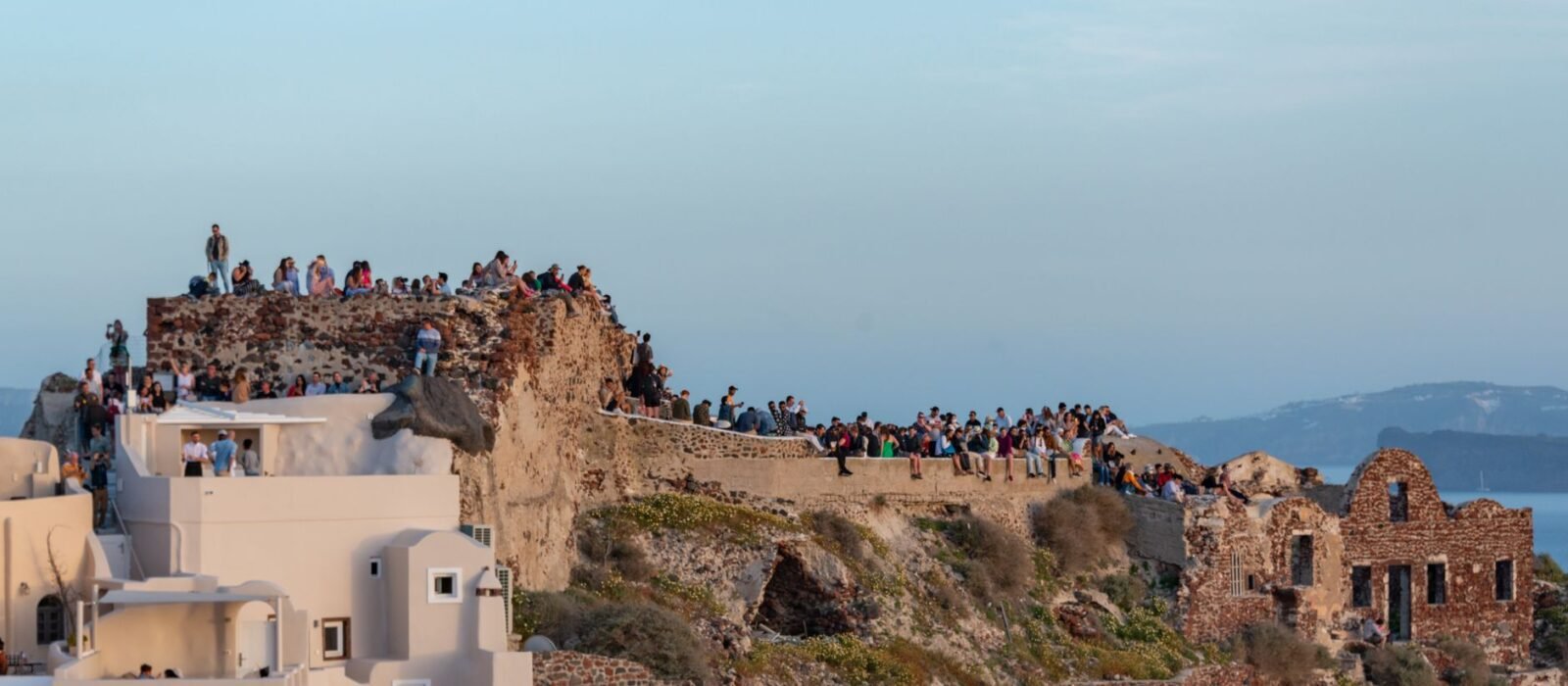
The Oia sunset is legitimately spectacular and the castle viewpoint (Kastro) is free to enter. What gets sold as a 'private sunset experience' or 'exclusive viewing spot' tour almost always ends at the same public castle ruins where a thousand other people are standing. There is no exclusive access. There is no reserved area. The 'guide' has no powers to hold a spot that any independent visitor cannot also occupy.
What you are actually paying for in these tours, often priced at €35–80 per person, is transportation from Fira and someone to walk with. That has some value if you want context — a knowledgeable local guide explaining the architecture and history of Oia is worth paying for. But the description 'exclusive sunset spot' is straightforwardly false. You can reach Oia by public bus (€1.80 from Fira), arrive by 6:30pm in summer, and claim your own free spot at the castle.
If you want a genuinely different sunset perspective, a sailing catamaran that positions offshore looking back at the caldera cliffs is far more impressive and genuinely cannot be replicated for free. Book that through Viator or GetYourGuide (look for operators with 500+ reviews and 4.5+ ratings) rather than a 'sunset tour' that just buses you to a public park.
Quad Bike Rental Damage Scam
Pre-existing scratches that only appear after you return the bike.
ATV and quad rentals are genuinely useful on Santorini — the island's road layout makes them practical for reaching beaches and villages quickly. The scam is not in the rental itself but in the return inspection. Shops in Perissa and Kamari (beach resort areas) are particularly associated with this pattern: minimal pre-rental photography, then a claim of fresh damage on return that conveniently equals your security deposit.
The countermeasure is methodical. Before moving the vehicle, photograph every panel, the underside of the handlebars, the seat, the footrests, and any existing rust or scratches — with timestamps enabled on your phone. Video the full walk-around is even better. Email or WhatsApp the photos to yourself immediately so the timestamp is externally verifiable. If the shop refuses to note existing damage on the rental agreement, go elsewhere.
Pay with a credit card. In a dispute, credit card companies side with cardholders who have documented evidence far more reliably than debit card issuers. Shops that demand cash only for a quad rental are flagging themselves as high risk before you've even started the engine.
Wine Tasting 'Tour' at Overpriced Shops
A free pour used to pressure €80 bottle purchases in tourist-zone shops.
Santorini's Assyrtiko is a genuinely excellent wine and the volcanic soil produces flavours difficult to replicate elsewhere. The legitimate wine experience — visiting a producer like Domaine Sigalas in Oia or Estate Argyros in Episkopi Gonias — costs €15–25 for a proper tasting flight with knowledgeable staff. What happens in some Fira tourist shops is different: a complimentary pour is followed by high-pressure sales pitches for bottles priced at €35–80 each, often with claims that 'this wine is impossible to find outside Greece' (it isn't — it's on Wine-Searcher).
The tells: no appointment needed, the person pouring cannot answer basic questions about the vintage or production method, and the 'tasting' happens at a shop counter surrounded by mass-market products. Actual wineries have dedicated tasting rooms and book appointments.
For honest wine education and fair prices, Santo Wines in Pyrgos and the wineries along the Episkopi Gonias route are the standard recommendations. Prices are higher than a supermarket but you are paying for provenance and the experience — not for the psychological debt of a free sample.
Black Sand Beach 'Shuttle' Markup
Overpriced private transfers to a beach served by a €2 public bus.
Both Perissa and Kamari — Santorini's famous black volcanic sand beaches — are served by regular KTEL bus routes from Fira bus station. The fare is €1.80–2.50 each way and the journey takes 25–35 minutes. Touts near the cable car area and in the main Fira square sell 'beach transfers' for €15–25 per person each way to the same destinations. The markup is 600–1000%.
The KTEL bus station in Fira is 200 metres from the main square, uphill from the caldera edge. Timetables are posted at the station and available at ktel-santorinis.gr — buses to the beach resorts run roughly every 30–60 minutes in peak season. This is entirely adequate for a beach day and the buses are air-conditioned.
This is the cheapest entry on the list because the fix costs nothing except knowing where the bus stop is. Santorini's public bus network covers all major destinations including the airport, Akrotiri archaeological site, Oia, and all beach resorts. A tourist who uses the bus exclusively for transport will save €60–100 per day compared to taxis and informal shuttles.
Akrotiri 'Private Guide' Upsell at the Gate
Unofficial guides at the site entrance charging for free audio guide content.
The Akrotiri Minoan site is one of the most significant Bronze Age excavations in the Mediterranean — genuinely worth the €12 entry fee. At the gate and in the car park, individuals present themselves as licensed guides and offer to accompany visitors through the site for €25–50 on top of the entry fee. Some are licensed; many are not. The distinction matters because the site itself provides an excellent free audio guide via QR code at the entrance, covering all major structures with academic commentary.
If you want a licensed guide, book through the site's official partner list (available at the ticket office) or arrange in advance through a reputable operator. An unlicensed guide at Akrotiri cannot access certain areas reserved for official tours and may provide historically inaccurate commentary — the site is too important to risk getting a fictional account of what you're looking at.
The site is open Tuesday through Sunday, typically 8am–8pm in summer (hours change seasonally; check the official Akrotiri website before visiting). Arriving before 10am means significantly smaller crowds and better light for photography inside the climate-controlled excavation shelter.
Get the Free Santorini Insider Guide
Where to watch the sunset without the crowds, which villages deserve your day, and what you need to book before you arrive.
The List
Each entry below represents a distinct category of overcharging or deception. They are ranked by how much money they typically cost the average visitor.
How to Book
For legitimate tours, book at least 3–4 weeks ahead for anything involving sunset viewing from Oia — those slots sell out fast, especially June through September. Volcano and hot-spring boat trips booked through Viator or GetYourGuide typically offer free cancellation up to 24 hours before departure, which matters when Aegean weather changes quickly. Always screenshot your confirmation. For restaurants, reservations at reputable spots in Imerovigli or Pyrgos (away from Fira’s main drag) can be made a week out. Never book island excursions from kiosks at the Fira cable car station or the cruise ship tender dock — those are the highest-risk booking points on the island.
Ones We Left Out and Why
Santo Wines in Pyrgos is frequently cited in scam discussions because of its high wine prices (€12–18 per glass), but the quality is consistent and the view is genuinely extraordinary — it is expensive, not dishonest. Amoudi Bay fish tavernas get heavy criticism online, but several are legitimate, just pricey; blanket condemnation would be unfair. The Fira–Oia hiking trail is sometimes described as a ‘trap’ because it is harder than expected and poorly signposted in sections, but it costs nothing and the scenery is worth the effort with proper preparation. We also considered including ATM skimming devices, but evidence of widespread organised skimming specifically in Santorini remains thin; standard card safety advice applies everywhere.
Frequently Asked Questions
Are taxi drivers in Santorini known for overcharging tourists?
How do I spot a fake or low-quality Santorini tour?
What restaurants in Santorini are known for overcharging?
Is it safe to use currency exchange booths in Santorini?
Are ATV and quad bike rentals in Santorini a scam?
More Things to Do in Santorini
Top-rated experiences with free cancellation and instant confirmation.
Related Articles
Visit the ancient Bronze Age city of Akrotiri — preserved under volcanic ash for 3,600 years and one…
The Santorini photography spots you keep seeing on every travel feed are real — but so is the…
Planning a Santorini family vacation takes more preparation than the average romantic getaway, and that gap between expectation…