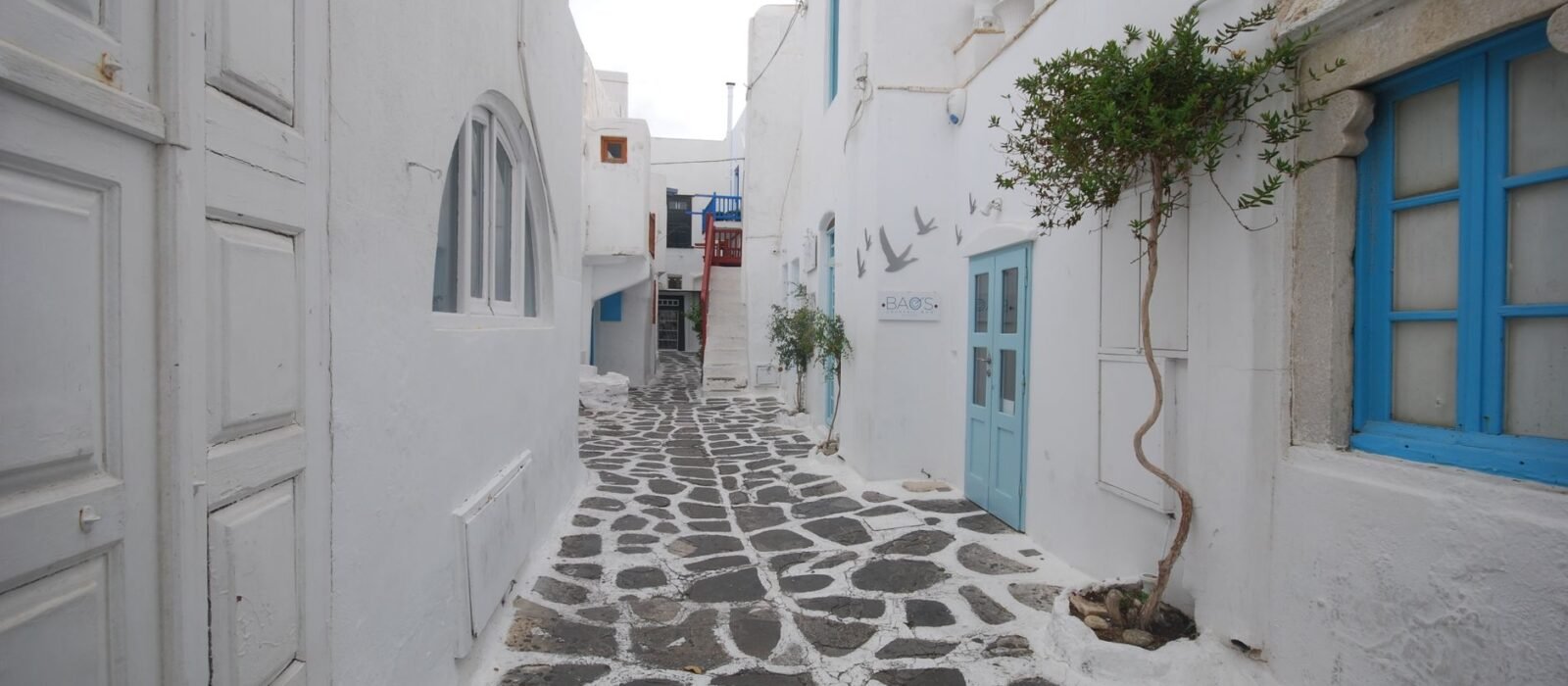
What Santorini’s Traditional Houses Are Actually Like
Traditional Santorini houses are far more than the postcard clichés of white walls and blue domes. The real experience of staying in one — whether a carved cave dwelling in Oia or a restored skaftos in Megalochori — involves low ceilings, irregular stone walls, surprising coolness in summer, and occasionally tricky logistics like steep staircases cut directly into volcanic rock. These are not luxury apartments dressed in rustic aesthetics. They are genuinely old structures, many dating to the 17th and 18th centuries, shaped by necessity as much as style. What surprises most visitors is how practical Cycladic architecture actually was: thick pumice walls regulate temperature without air conditioning, and the asymmetrical layouts reflect centuries of families adapting to the caldera’s dramatic topography. Expect charm, yes, but also occasional quirks — awkward bathroom configurations, minimal natural light in true cave rooms, and occasional noise from neighboring terraces in Oia.
Where Exactly Is Santorini?
Santorini sits in the southern Aegean, roughly 200 kilometres southeast of Athens. The island’s main settlements are arranged along the caldera rim: Fira (the capital) sits roughly central, Oia is 11 kilometres north at the tip, Imerovigli is 3 kilometres north of Fira, and Pyrgos is about 8 kilometres inland and south. The traditional villages most worth seeking out for authentic architecture — Megalochori, Akrotiri village, Emporio, and Pyrgos — are all in the southern half of the island. Driving from Fira to Oia takes roughly 25 minutes without traffic; Fira to Pyrgos is about 15 minutes. The ferry port at Athinios is on the western coast, 12 kilometres south of Fira. Santorini’s airport is 6 kilometres southeast of Fira, on the island’s flat eastern side.
How to Get There
Getting to Santorini means flying or taking a ferry. Direct flights from Athens with Aegean or Sky Express take around 45 minutes; expect fares of roughly €60–140 return depending on season and booking lead time. Flying from major European cities — London, Amsterdam, Rome — takes 3–4 hours, with summer charter and scheduled fares ranging €120–350 return. Ferries from Piraeus (Athens’ port) take 5–8 hours depending on whether you choose a conventional ferry or a high-speed catamaran; high-speed tickets run approximately €60–90 one way, slow ferries €35–55. Once on the island, KTEL buses connect the port, airport, Fira, and most villages for €1.80–2.60 per journey — genuinely useful for getting between Fira and Oia. Renting an ATV costs around €25–45 per day and suits confident riders comfortable with narrow cliff roads. For those wanting a curated arrival experience, private transfers from the port or airport run €25–50 and are bookable through GetYourGuide or directly with hotels. Walking between villages is possible — the caldera trail from Fira to Oia takes 3–4 hours and is spectacular but exposed in July heat.
What to Expect When You Arrive
Arriving in Oia or Fira with luggage and looking for a traditional cave house means one thing almost immediately: stairs. Lots of them. Properties on the caldera rim rarely have road access; porters with donkeys or manual luggage trolleys are a practical reality, sometimes costing €5–15 to haul bags to a property. Inside a genuine cave house, rooms carved into the volcanic tuff stay naturally cool — around 20°C even in August — which is genuinely impressive and reduces reliance on air conditioning. Most restored properties now include modern plumbing and wifi, though water pressure can vary. Expect small kitchens, compact bathrooms, and terraces that serve as the main living space. The absence of flat surfaces anywhere near the caldera means grocery shopping involves walking uphill with bags. In southern villages like Megalochori, the terrain is flatter and access far easier, though you sacrifice caldera views.
Get the Free Santorini Insider Guide
Where to watch the sunset without the crowds, which villages deserve your day, and what you need to book before you arrive.
Best Time to Visit
Late April through early June and September through mid-October offer the clearest combination of good weather, lower prices, and manageable crowds. July and August are peak season: temperatures reach 30–35°C, Oia becomes genuinely congested by 10am, and prices for caldera-view cave houses surge — a property that rents for €180 per night in October can reach €450 in August. For photography, the golden hour before sunset in Oia draws enormous crowds to the castle ruins; arriving at the spot by 6:30pm in summer means competing with hundreds of others. Sunrise, by contrast, is quiet almost everywhere on the island and extraordinarily clear in early morning light. November through March sees most caldera-rim businesses close, with limited accommodation options and occasional rough weather.
Honest Crowd Assessment
Santorini’s overtourism problem is real and well-documented. The island receives over two million visitors annually on a landmass of 76 square kilometres. In July and August, Oia’s main street becomes physically difficult to walk at sunset — not exaggerated. Cruise ships dock regularly at Athinios and tender passengers into Fira via cable car or donkey path, flooding the capital’s streets between 10am and 5pm. Fira itself during peak season is noisy, overpriced for food, and lacks the architectural atmosphere of smaller villages. Pyrgos and Emporio remain considerably quieter through June and September. If you visit in peak summer expecting peaceful winding alleys and private caldera moments, you will be disappointed. Shoulder season genuinely transforms the experience.
Practical Details for 2026
- Cave house rental: Caldera-view properties in Oia range approximately €180–600+ per night in peak season; €100–280 in shoulder season
- Southern village houses: Megalochori and Pyrgos offer traditional properties at €80–200 per night with significantly fewer crowds
- Bus fares: KTEL Santorini routes cost €1.80–2.60; Fira to Oia is roughly €1.80
- Architecture tours: Guided walking tours focused on Cycladic architecture are bookable through Viator, typically €30–60 per person for 2–3 hours
- Cable car (Fira to old port): Approximately €6 one way
- Booking lead time: Caldera-rim properties for July and August routinely sell out by February; book early
- Luggage transfers: Budget €10–20 if staying in a property without road access
- Water: Tap water is not drinkable island-wide; bottled water costs €0.80–2 per litre in shops
Is It Worth It?
Staying in a traditional Santorini cave house is genuinely unlike any other accommodation experience in the Mediterranean — the architecture works, the cool interiors are a revelation in summer, and the caldera views from a private terrace are as good as advertised. But the premium is steep, the logistics are physical, and Oia in peak season tests the patience of even enthusiastic travellers. Skip it if you prioritise convenience, flat terrain, or budget travel. Skip Oia specifically if you cannot book three to four months in advance. The honest verdict: choose a property in Imerovigli or a southern village over Oia for a calmer version of the same architectural experience, often at half the price.
Frequently Asked Questions
What is a cave house in Santorini and is it comfortable to stay in?
Which village has the best traditional architecture without the Oia crowds?
How far in advance should I book a caldera-view cave house for summer 2026?
Is Cycladic architecture only found on Santorini?
Are there guided architecture tours of Santorini's traditional buildings?
More Things to Do in Santorini
Top-rated experiences with free cancellation and instant confirmation.
Related Articles
Santorini’s Beaches Are Not What You Expect Most people come to Santorini for the sunsets over Oia and…

Updated July 2026: Update (July 2026): We’re deep into peak season now, which makes January feel like a…
Picking the Right Base in Santorini Matters More Than You Think Most people book a cave hotel in…