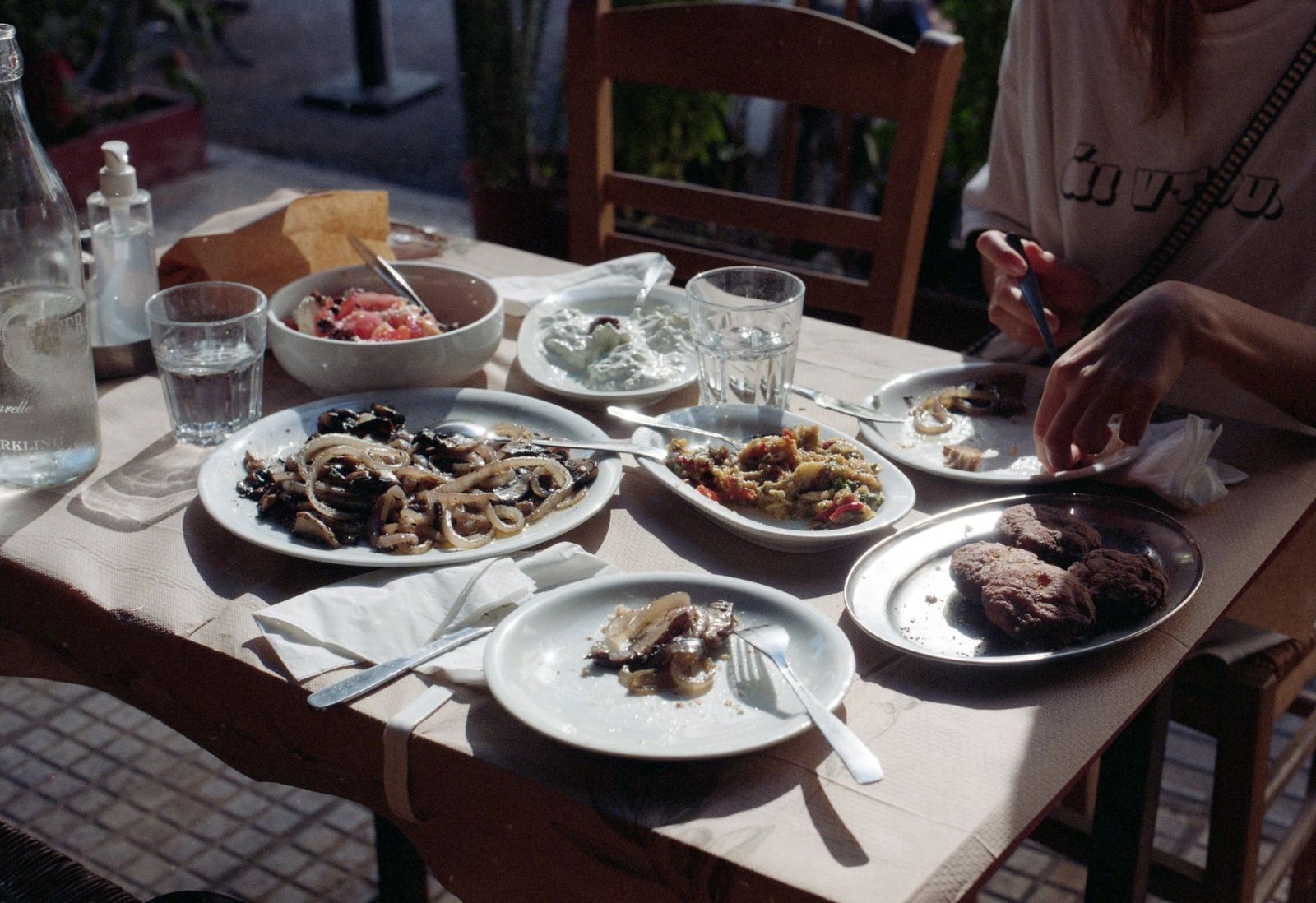
Forget the Cliffside Restaurants — Here’s Where the Real Food Is
If you’re chasing Santorini street food that won’t drain your wallet before you’ve even seen a sunset, you’re going to need to move away from Oia’s Instagram row and get yourself to Fira’s back streets or, better yet, down to the port towns where tourists rarely wander. I’ve eaten my way around this island more times than I can count, and yes — it is absolutely possible to eat well here without spending €35 on a plate of tomato fritters just because there’s a caldera view attached.
Theoxenia Bakery
Top PickTheoxenia Bakery on Erythrou Stavrou Street opens at 7am and sells fresh tiropita (cheese pie) for around €2.50 and spanakopita for the same. A Greek coffee is €1.80. The cheese pies here are made with local Santorini chloro cheese — softer and tangier than the standard feta you get elsewhere in Greece.
Roka Souvlaki
Roka Souvlaki near the Fira bus station has been feeding locals and budget travellers since the late 1990s. A pork souvlaki wrap loaded with tzatziki, tomato, and onion costs about €3.50 in 2026. They don't mess around with fancy presentation — it comes wrapped in paper and you eat it standing up.
Souvlaki Story
Souvlaki Story near the main square there does a solid chicken skewer plate with rice and salad for €9 — the kind of meal that actually fills you up.
Lolita's Gelato
The best version I've had is at Lolita's Gelato in Oia (yes, despite the name, they also do pastries), where a slice costs €3.80. Melopita is a honey and cheese tart made with the island's myzithra cheese — it's not heavily sweetened, slightly grainy in texture, and honestly unlike anything you'll get on the mainland.
Emporio
Emporio is the largest medieval village on the island and almost entirely off the tourist circuit. There's a small central square with a couple of kafeneions and a traditional grocery that doubles as a deli. You can put together a genuinely excellent lunch — local olives, bread, tomatoes, and some local cheese — for around €6.
Practical Budget Tips for 2026
Santorini’s food prices have climbed again since 2024, largely because of ongoing demand and the strength of tourism post-pandemic. Sit-down restaurant meals in Oia or Imerovigli easily run €50–70 per person with wine. But the local infrastructure — bakeries, souvlaki spots, village tavernas, street food stalls near the cable car in Fira — has stayed relatively accessible if you know where to look.
The bus system (KTEL) is cheap at around €2.50 per ride and connects most villages. If you want a structured introduction to the island’s food culture before going solo, a food-focused walking tour booked through GetYourGuide or Viator usually runs €45–65 per person and includes tastings — genuinely useful for orienting yourself on day one.
Daily Food Budget Breakdown (Realistic, 2026)
- Breakfast: Bakery tiropita + Greek coffee — €4–5
- Lunch: Souvlaki wrap or market picnic — €5–9
- Afternoon snack: Loukoumades or melopita slice — €3–5
- Dinner: Village taverna, away from Oia — €15–22 with a carafe of local wine
- Total daily food spend: €27–41 — very doable
The island rewards people who walk a little further, ask locals where they eat, and resist the gravitational pull of the views-with-markup restaurants. The food underneath the tourist layer is genuinely good — Santorini produces unique ingredients and there are cooks here who know what to do with them. You just have to find them.
Hungry for more? Our sister site FoodTourTrails has an in-depth Santorini food guide — best dishes, where locals actually eat, and food tours worth booking.
Frequently Asked Questions
What is the cheapest area to eat in Santorini?
Is street food common in Santorini?
What local food should I try in Santorini that I can't get elsewhere?
Are food tours in Santorini worth it?
When is the best time to visit Santorini for food without massive crowds?
More Things to Do in Santorini
Top-rated experiences with free cancellation and instant confirmation.
Related Articles
The Santo Winery cave tour is one of those rare experiences in Santorini that actually lives up to…
Skip the Overpriced Souvenir Shops — Go to the Markets Shopping at Santorini local markets is genuinely one…

If you’re planning a trip and researching Santorini nightlife, let me save you some time and some money.…